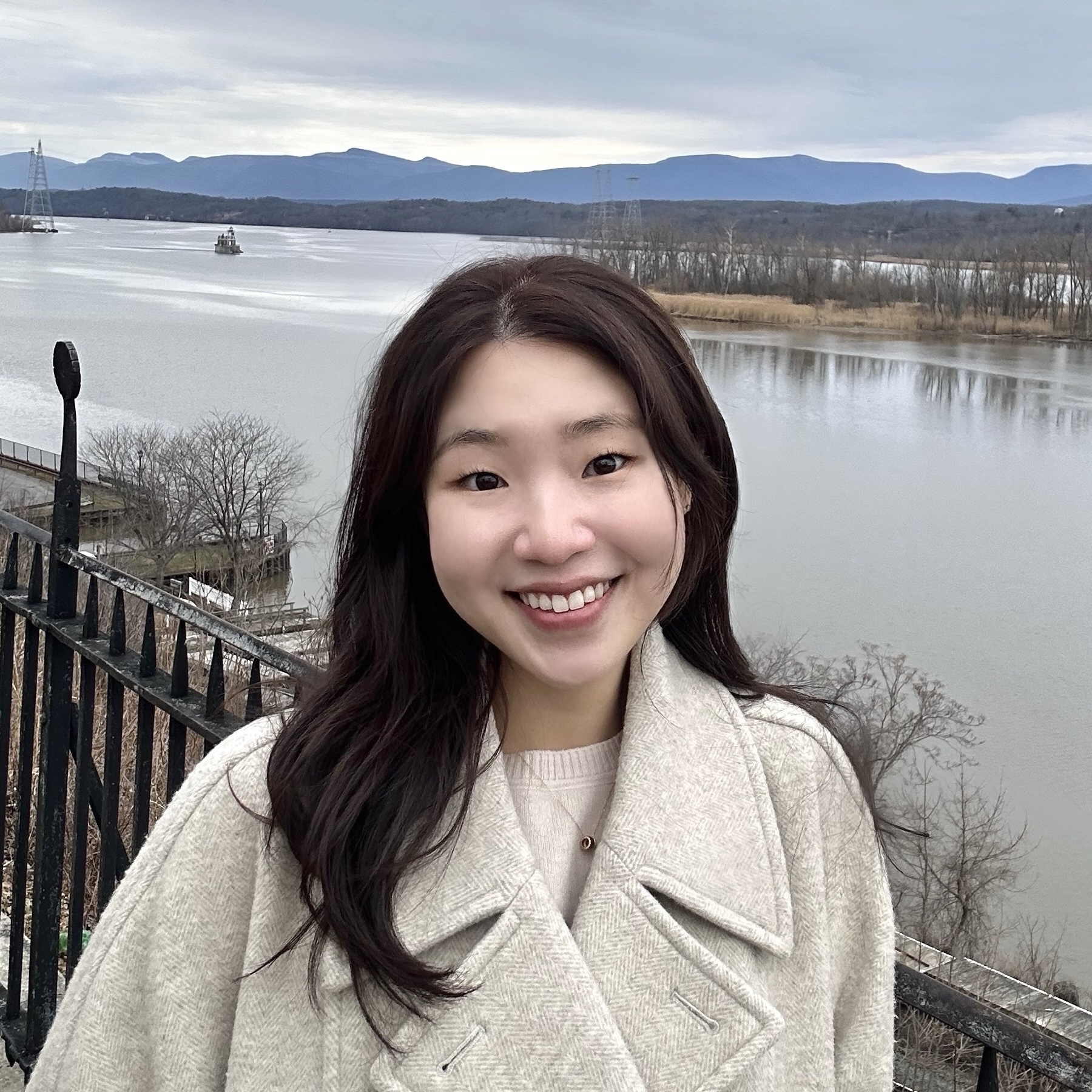
Seowoo Chung
Ph.D. Candidate
Department of Political Science
Columbia University
Welcome! I am a Ph.D. candidate in the Department of Political Science at Columbia University, specializing in international political economy and international institutions. My research studies the politics of global governance under strain, focusing on how governments, firms, and IOs navigate the erosion of multilateral rules, enforcement, and legitimacy.
My work has been published in or is forthcoming in International Studies Quarterly and The Review of International Organizations. My research is supported by the Columbia Center for Political Economy and the APSA-NSF Doctoral Dissertation Research Improvement Grant (DDRIG). I hold a B.A. and M.A. in Political Science from Korea University, Seoul.
You can view my CV (updated October 2026) here.
Publications
-
Global Governance Unbound? Expansion Dynamics in the IMF
(with Allison Carnegie and Richard Clark)
Accepted, Review of International Organizations. ▶ abstractWhile international organizations (IOs) are frequently criticized for both overreach and circumspection, these debates often rest on anecdotal evidence. This article introduces a text-based method to measure changes in organizational thematic scope as reflected in IO research outputs. Applying this method to the International Monetary Fund and Asian Development Bank, we show that these IOs' staff-authored research outputs increasingly engage new issue areas. We also highlight important differences in their trajectories. This approach offers a scalable and replicable framework for tracking IO agenda evolution across institutions and over time. We conclude by outlining how this methodology can inform broader debates on IO legitimacy, effectiveness, and the adaptive capacity of global governance institutions.
-
Strategic Censorship? Public Opinion, Authoritarian Politics, and the International Trade Regime
International Studies Quarterly, 2026, 70(3). ▶ abstractInternational organizations promote cooperation by diffusing information among states and the public. But how does this information reach the public under authoritarian regimes? I examine how an authoritarian government with a censorship apparatus can use government-controlled media to offset international organizations’ information effects. The authoritarian government selectively censors IO news based on the likelihood of success in invoking a defensive reaction, suppressing complaints made by neutral counterparts that may lead to concerns for noncompliance while allowing limited attention toward provocative complaints by hostile states. I find support for my arguments through analysis of an original dataset of Chinese newspaper articles by 116 newspapers on all WTO disputes involving China. Survey experiment on Chinese citizens tests the microfoundations of the information strategy, finding that exposure to information about China being sued in a WTO dispute significantly reduces support for international law, especially for those disputes against the United States.
Job Market Paper
-
The Decline of Multilateralism and Foreign Lobbying: Evidence from the WTO Appellate Body Crisis
▶ abstractHow do firms adapt to the decline of multilateralism? I argue that the delegalization of international institutions increases the returns to domestic political lobbying for firms exposed to foreign trade barriers. Focusing on WTO adjudication, I argue that as this system becomes less reliable, the trajectory of contested trade barriers becomes less institutionally anchored and their administration less constrained by external review. These changes make lobbying a more valuable means of managing political risk and seeking firm-specific relief. I test this argument using the WTO Appellate Body crisis and a novel firm-level measure of exposure to U.S. antidumping and countervailing duties, constructed from 3.9 million bill-of-lading records and the timing of U.S. trade-remedy actions. Panel event-study estimates show that the effect of trade-remedy exposure on lobbying rises sharply in late 2017 and persists across the Trump and Biden administrations, indicating a durable shift in firm strategy. The response is concentrated among firms from active WTO litigants and those importing products previously contested at the WTO, for whom the loss of adjudication was most consequential. My findings show that the erosion of multilateral institutions does not eliminate foreign influence over trade policy, but rather redirects it toward the more opaque arena of domestic lobbying.
Working Papers
-
Informational Autonomy: AI and the Changing Role of International Organizations (with Allison Carnegie and Lisa Fan)
▶ abstractA foundational role of international organizations is to solve problems of information. They gather and circulate data, monitor compliance, verify behavior, and reduce uncertainty in ways that help states cooperate. Artificial intelligence would seem to make them much better at this, as it allows IOs to collect information from open sources, process large quantities of data, and identify violations more quickly and independently. We argue, however, that as AI improves monitoring, it also increases the informational autonomy of international organizations, reducing their reliance on member states for tasks that anchored the principal-agent structure of global governance. The result is a dynamic in which organizations become more autonomous in an era in which they are being criticized for over-reach. Combining new data with qualitative evidence, we show that international organizations are increasingly producing information independently of member states, particularly in domains where AI has the greatest potential to substitute for state-provided information. These changes reshape a foundational source of member-state control over international organizations, with important implications for authority, legitimacy, and compliance in global governance.
-
AI in Global Governance: International Organizations, Emerging Technology, and Legitimacy (with Allison Carnegie and Lisa Fan)
▶ abstractInternational organizations (IOs) need legitimacy to perform their mandates, but they also compete for public attention in an increasingly crowded information environment. This paper argues that artificial intelligence creates an attention--legitimacy tradeoff for global governance. On the one hand, AI can make IOs appear innovative, modern, and capable of addressing complex problems, thereby increasing public engagement. On the other hand, AI can undermine legitimacy because many people associate it with opacity, elite control, and weak accountability. We evaluate this argument using an original survey experiment and novel social media data. In the experiment, respondents are less supportive of IOs when those organizations emphasize their use of AI. In the observational analysis of IO Twitter posts from 2012 to 2022, however, tweets referencing AI generate greater engagement than otherwise similar posts. Our findings show that AI can increase the visibility of international organizations while eroding trust in them, creating a key tension as IOs seek to navigate the evolving global governance landscape.
Works in Progress
- Detection without Enforcement: Artificial Intelligence and the Limits of Global Governance (with Allison Carnegie and Lisa Fan)
- Political Barriers to the Energy Transition: Climate Risk, Investment Protection, and Firm Behavior
- Revolving Door Diplomats (with David Lindsey, Matt Malis, and Calvin Thrall)